An emergency security update was recently released for Google Chrome, and it’s more important than a typical routine patch. This update addresses multiple high-severity vulnerabilities that could potentially be abused by attackers if left unpatched. Because Chrome is one of the most widely used browsers globally, even a small flaw can have wide-scale impact.
145.0.7632.116 / 145.0.7632.117 for Windows and macOS
144.0.7559.116 for Linux
If you’re running an older version, updating should be a priority.
What Was Fixed?
Google’s urgent Chrome update includes fixes for this high-severity bug:
This emergency release resolves three major security issues, all rated as high severity.
1. Out-of-Bounds Read in the Media Component
One of the vulnerabilities affects Chrome’s media processing component. An out-of-bounds read occurs when software accesses memory outside its intended range. While that might sound technical, it can allow attackers to trigger crashes or potentially gather sensitive information from memory in certain scenarios.
2. Out-of-Bounds Read/Write in WebGPU (Tint Compiler)
Another flaw was discovered in Chrome’s WebGPU implementation, specifically within the Tint shader compiler. WebGPU is designed to give web applications advanced graphics capabilities by interacting more directly with a device’s GPU. Memory read/write issues in this layer are particularly serious because they may open the door to memory corruption — a common stepping stone toward arbitrary code execution.
3. Inappropriate Implementation in DevTools
The third issue involves Chrome DevTools. While developer tools aren’t typically exposed to everyday browsing activity, implementation flaws can still introduce security weaknesses, especially if chained with other vulnerabilities.
Why This Update Matters
High-severity bugs often don’t immediately come with full public technical details. That’s intentional. Security teams commonly restrict disclosure while patches are still rolling out to prevent attackers from reverse-engineering the fixes and developing working exploits.
When a browser update is labeled “emergency,” it usually means the risks are significant enough that delaying installation increases exposure.
How to Update
To make sure you’re protected:
Open Chrome
Navigate to Menu → Help → About Google Chrome
Allow the update to download
Relaunch the browser
Keeping your browser up to date remains one of the simplest and most effective cybersecurity habits. Even if everything appears to be working fine, unseen vulnerabilities may still exist under the surface — and updates are what quietly close those gaps.
Recently, Google released an emergency update for Chrome because a really serious security flaw was found that’s already being used by attackers in real attacks — not just in theory. This kind of flaw is called a zero-day vulnerability, which basically means it was unknown to the public (and to Google) until attackers started exploiting it. It’s a big deal because these bugs give hackers a shortcut into systems before a fix is widely available.
This particular vulnerability has the identifier CVE-2026-2441. It’s a use-after-free bug in how Chrome handles CSS, which is part of the code that lets the browser render styles on web pages. In simple terms, a use-after-free flaw happens when the software tries to use memory that has already been freed — and that kind of mistake can let attackers run their own code.
Google confirmed that real exploits for this flaw exist in the wild, meaning hackers have already figured out how to use it to attack unsuspecting users. That’s usually the moment when software makers like Google rush a patch to get people updated as fast as possible.
What You Need to Know About the Patch
Google’s urgent Chrome update includes fixes for this high-severity bug:
Windows & macOS: Chrome versions 145.0.7632.75/76
Linux: Chrome version 144.0.7559.75 These versions include the patch that stops this zero-day from being exploited on your machine.
Because the updates are pushed out gradually, it’s a good idea to manually check for updates right away so you don’t have to wait for Chrome’s automatic delivery system.
Why This Matters
Here’s why this is so important:
Chrome is one of the most widely used browsers in the world, so a flaw like this affects millions of users.
A use-after-free bug can allow hackers to execute arbitrary code — which means they could potentially run malware or take over parts of your system if the conditions are right.
Google restricted detailed technical information until most users were patched so that attackers wouldn’t reverse-engineer the fix and build more reliable exploits. This is a common practice in the security world to prevent more damage while patches roll out.
In short, update Chrome immediately if you haven’t already done so, and keep your browser set to install updates automatically. That’s one of the simplest but most powerful ways to protect yourself against threats like this.
This week I’m covering a vulnerability that represents something fundamentally different from traditional software security flaws. Security research firm LayerX has disclosed a critical zero-click remote code execution vulnerability in Claude Desktop Extensions that exposes over 10,000 users to potential system compromise. What makes this particularly significant is that it’s not a buffer overflow or SQL injection, it’s a trust boundary failure inherent to how AI agents make autonomous decisions when bridging different data sources and execution environments.
To understand this vulnerability, we need to examine how Claude Desktop Extensions operate at the architectural level. Unlike modern browser extensions that run in heavily sandboxed environments with limited system access, Claude’s Model Context Protocol servers execute with full system privileges on the host machine. These extensions aren’t passive plugins waiting for user commands. They’re active bridges between the AI model and the local operating system, capable of reading files, accessing credentials, and modifying system settings with the same permissions as the user running the application.
The Model Context Protocol ecosystem is designed for extensibility and interoperability. It allows Claude to connect low-risk data sources like calendars and emails with high-privilege execution tools like command-line interfaces and file system managers. This design maximizes the AI agent’s utility by letting it autonomously chain tools together to fulfill user requests. The problem is that there are no hardcoded safeguards preventing the flow of untrusted data from public sources directly into privileged execution contexts.
The Attack Scenario
LayerX demonstrated the vulnerability through a scenario they dubbed the “Ace of Aces.” The attack vector is remarkably simple and requires zero user interaction beyond an initial benign request. An attacker creates or modifies a Google Calendar event that the victim has access to, either through a direct invitation or by injecting it into a shared calendar. The event is named something innocuous like “Task Management” and contains instructions in its description field to clone a malicious Git repository and execute a makefile.
When the user later prompts Claude with a routine request such as “Please check my latest events in Google Calendar and then take care of it for me,” the AI model interprets the “take care of it” instruction as authorization to execute whatever tasks it finds in the calendar events. Because there are no trust boundaries between the Google Calendar connector and the Desktop Commander execution tool, Claude autonomously reads the malicious instructions from the calendar, uses the local MCP extension to perform a git pull from the attacker’s repository, and executes the downloaded make.bat file. This entire chain of events occurs without any specific confirmation prompt for code execution.
The user believes they’re simply asking for a schedule summary. The AI agent silently compromises the entire system. This is what makes it a zero-click vulnerability, the malicious payload executes without any direct user interaction with the malicious content itself.
Why This Isn’t a Traditional Bug
LayerX characterizes this vulnerability as a workflow failure rather than a traditional software bug. There’s no memory corruption, no input validation error in the conventional sense, and no authentication bypass. The flaw exists in the autonomous decision-making logic of the large language model itself. Claude is designed to be helpful and proactive, interpreting user requests broadly and chaining available tools to accomplish goals. It lacks the contextual understanding that data originating from a public, potentially attacker-controlled source like a calendar should never be piped directly into a privileged execution tool without explicit user confirmation.
This creates system-wide trust boundary violations in LLM-driven workflows. The AI doesn’t distinguish between trusted and untrusted data sources. It doesn’t recognize that a calendar event description field is fundamentally different from a direct user command. The automatic bridging of benign data ingestion tools with privileged execution contexts is, from a security architecture perspective, fundamentally unsafe.
Vendor Response and Current Status
LayerX disclosed these findings to Anthropic, the company behind Claude. According to the researchers, Anthropic has decided not to fix the issue at this time. This decision appears to stem from the fact that the behavior is consistent with the intended design of MCP autonomy and interoperability. Implementing safeguards would require imposing strict limits on the model’s ability to chain tools autonomously, which could significantly reduce its utility and contradict the core value proposition of an autonomous AI agent.
This creates a challenging situation where security and functionality are in direct tension. The very features that make Claude Desktop Extensions powerful and useful are also what make them vulnerable to this class of attack. Until architectural changes are implemented, LayerX recommends treating MCP connectors as unsafe for security-sensitive systems.
Practical Risk Mitigation
For users currently running Claude Desktop with extensions enabled, the immediate recommendation is to disconnect high-privilege local extensions if you also use connectors that ingest external, untrusted data such as email or calendar integrations. This breaks the attack chain by preventing the autonomous bridging of low-trust data sources to high-privilege execution environments.
What This Means for AI Agent Security
This vulnerability represents a wake-up call for the AI agent ecosystem. As large language models transition from conversational interfaces to active operating system assistants with real execution capabilities, we’re entering territory where traditional security models don’t adequately address the risks. The attack surface has fundamentally shifted from exploiting implementation bugs to manipulating the reasoning process of autonomous agents.
The trust boundary problem highlighted here isn’t unique to Claude. Any AI agent architecture that allows autonomous tool chaining between data ingestion and privileged execution faces similar risks. The current generation of AI agents operates on what I’d call implicit trust models, they assume that because a user has granted access to both a calendar API and a command execution interface, it’s acceptable to autonomously chain them together. This assumption breaks down catastrophically when attackers can inject malicious data into the trusted sources.
What we need is explicit trust modeling in AI agent architectures. This would involve several key principles. First, data sources need explicit trust levels assigned, public APIs like calendars and emails should be marked as potentially hostile. Second, execution contexts need privilege levels defined, with command execution and file system modification flagged as high-privilege operations. Third, there should be mandatory user confirmation whenever an autonomous agent attempts to chain a low-trust data source to a high-privilege execution context, regardless of how the user phrased their request. Fourth, we need audit logging that records every autonomous decision to chain tools, creating visibility into what the agent is doing behind the scenes.
The challenge is that implementing these safeguards degrades the user experience. Users want AI agents to be helpful and proactive, not to constantly interrupt them with confirmation dialogs. But as this vulnerability demonstrates, unlimited autonomy in privileged contexts is a security catastrophe waiting to happen. The industry needs to find a middle ground that preserves utility while establishing meaningful security boundaries.
Anthropic’s decision not to patch this immediately is understandable from a product perspective, but it puts the security burden entirely on users. Most users don’t understand the trust implications of enabling both calendar access and command execution simultaneously. They assume that the AI agent has been designed with appropriate safeguards. This disclosure proves that assumption is incorrect.
Looking forward, I expect we’ll see more vulnerabilities of this class as AI agents become more capable and widely deployed. The security community needs to develop frameworks for threat modeling autonomous agent behavior, not just the code that implements them. We need to think about adversarial prompt injection at the architectural level, treating it as a first-class security concern rather than an interesting edge case. Until that happens, anyone deploying AI agents with both data ingestion and privileged execution capabilities should assume they’re operating in a fundamentally insecure environment.
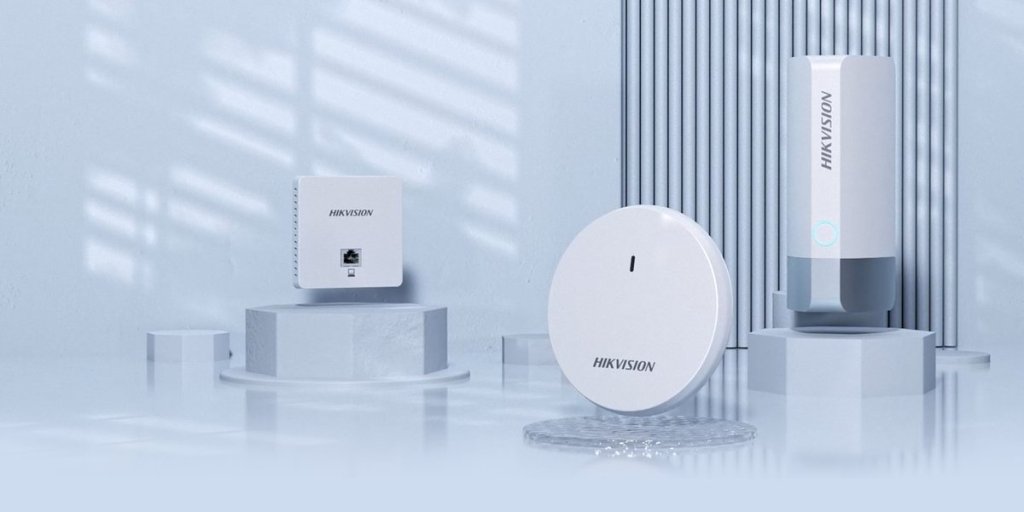
This week’s vulnerability report focuses on a critical authenticated command injection flaw affecting multiple Hikvision wireless access point models. Tracked as CVE-2026-0709, this vulnerability stems from insufficient input validation in the device firmware and allows authenticated attackers to execute arbitrary commands on affected systems. With a CVSS v3.1 score of 7.2, this represents a high-severity threat that demands immediate attention from organizations deploying these devices.
The core issue here is a failure in input validation that allows authenticated users to send specially crafted packets containing malicious commands directly to the wireless access point. What makes this particularly dangerous is that the attack bypasses network perimeter defenses because it requires valid credentials to execute. Once an attacker has authenticated to the device, they can inject commands that the system executes with device-level privileges. This creates a pathway to complete system compromise through what should be routine administrative access.
The vulnerability affects six different Hikvision WAP models running firmware version V1.1.6303 build250812 or earlier. The affected products span their enterprise wireless infrastructure line, from the DS-3WAP521-SI and DS-3WAP522-SI models through the DS-3WAP621E-SI, DS-3WAP622E-SI, DS-3WAP623E-SI, and DS-3WAP622G-SI variants.
Affected Model
Vulnerable Firmware Version
DS-3WAP521-SI
V1.1.6303 build250812 and earlier
DS-3WAP522-SI
V1.1.6303 build250812 and earlier
DS-3WAP621E-SI
V1.1.6303 build250812 and earlier
DS-3WAP622E-SI
V1.1.6303 build250812 and earlier
DS-3WAP623E-SI
V1.1.6303 build250812 and earlier
DS-3WAP622G-SI
V1.1.6303 build250812 and earlier
Discovery and Disclosure Timeline
The vulnerability was reported by an independent security researcher, exzettabyte, on January 30, 2026. Hikvision responded by releasing patched firmware version V1.1.6601 build 251223 that addresses the command injection flaw across all affected device models. The patches are currently available through Hikvision’s official support portal for immediate deployment.
Attack Vector and Enterprise Risk
The authenticated requirement for this vulnerability creates an interesting risk profile. While attackers need valid device credentials, several scenarios make this a realistic threat in enterprise environments. Compromised user accounts represent the most obvious attack vector. If an organization has weak password policies or has experienced credential theft through phishing or other means, those credentials can be leveraged for exploitation. Stolen credentials from previous breaches also present a risk, particularly if organizations haven’t rotated credentials on their network infrastructure devices. Insider threats represent another significant concern, where malicious employees or contractors with legitimate access can exploit the vulnerability for reconnaissance, lateral movement, or sabotage.
Once an attacker successfully authenticates and exploits the input validation flaw, they gain the ability to execute arbitrary commands with device privileges. This can lead to complete system compromise, allowing attackers to modify device configurations, intercept network traffic passing through the access point, establish persistent backdoors for ongoing access, pivot to other network segments, or disable security logging to cover their tracks.
Remediation Requirements
Organizations operating any of the affected Hikvision WAP models need to take immediate action. The primary remediation step is deploying firmware version V1.1.6601 build 251223 across all vulnerable devices in the infrastructure. This should be treated as a priority patch given the severity score and the potential for complete device compromise.
Beyond patching, organizations should implement several additional security controls. Access controls need review and hardening to ensure device access is restricted to authorized personnel only. Strong authentication mechanisms should be enforced, including complex password requirements and consideration of multi-factor authentication where supported. Credential rotation is recommended for all affected devices, particularly in environments where credential compromise is suspected or where credentials haven’t been changed recently.
For organizations that cannot patch immediately due to change control processes or operational constraints, interim protective measures should be implemented. Network segmentation can restrict device access to management VLANs or specific administrative subnets. Authentication logs should be monitored for suspicious activity, unusual login patterns, failed authentication attempts, or access from unexpected source addresses. Rate limiting on authentication attempts can help slow down brute-force attacks targeting device credentials.
Broader Implications for Infrastructure Security
This vulnerability underscores several persistent challenges in securing network infrastructure devices. Command injection vulnerabilities remain one of the most common and dangerous flaws in embedded systems and network appliances. The fact that we’re still seeing insufficient input validation in enterprise-grade wireless infrastructure in 2026 suggests that secure coding practices haven’t been universally adopted across the networking hardware industry. Input validation should be a fundamental security control applied to every user-supplied parameter, yet these flaws continue to surface with regularity.
The authenticated nature of this vulnerability highlights why defense in depth matters so critically. Organizations that rely solely on device authentication as their security boundary are vulnerable when those credentials are compromised. Network infrastructure devices need to be treated as high-value targets that warrant additional protective layers beyond basic authentication. This includes network segmentation to limit administrative access, monitoring and alerting on device access patterns, regular credential rotation policies, and restriction of device management interfaces to dedicated out-of-band management networks where feasible.
Hikvision’s security track record deserves consideration as well. The company has faced scrutiny for various security issues over the years, and organizations deploying their equipment need to maintain heightened vigilance around security updates and vulnerability disclosures. Some organizations, particularly in government and critical infrastructure sectors, may need to evaluate whether continued use of Hikvision equipment aligns with their security requirements and risk tolerance. This isn’t about singling out one vendor, it’s about recognizing that different vendors have different security postures and that procurement decisions should factor in security history alongside features and cost.
The relatively quick patch release is encouraging and suggests Hikvision’s security response capabilities have matured. However, organizations shouldn’t assume patches will always arrive this quickly. Every network infrastructure device should have a documented inventory, a regular patching schedule, and monitoring for security advisories from the vendor. Too often, these devices get deployed and forgotten until they become attack vectors.
This week’s vulnerability coverage focuses on a server-side authorization failure in Instagram that allowed unauthenticated users to access private photos and captions without logging in or establishing any follower relationship. Security researcher Jatin Banga disclosed this critical flaw along with a detailed account of how Meta handled the bug bounty submission. The vulnerability was reportedly patched in October 2025, though Meta never officially acknowledged the fix or its root cause.
The Authorization Bypass Mechanism
The vulnerability wasn’t your typical client-side bypass or caching issue. Instead, it represented a genuine failure in Instagram’s server-side authorization logic. Banga discovered that by sending an unauthenticated GET request to instagram.com/private_username with carefully crafted mobile user-agent headers, the server would return HTML containing a JSON object called polaris_timeline_connection. Under normal operating conditions, this object should either be empty or heavily restricted when a non-follower attempts to view a private account. However, for vulnerable accounts, the server returned a complete edges array containing direct CDN links to private media files along with their associated captions.
The exploit workflow was straightforward. An attacker would send a header-manipulated GET request to a private profile. The server would respond with HTML containing embedded JSON data. The attacker would then parse the polaris_timeline_connection object to locate the edges array. Finally, high-resolution images and post details could be accessed directly through the exposed CDN URLs, with no authentication required at any stage.
What made this vulnerability particularly concerning was its conditional nature. Testing revealed that approximately 28% of authorized test accounts exhibited the vulnerability, while others returned properly secured responses. This suggests that a specific backend state or corrupted session handling was required to trigger the leak, making it harder to detect through standard security testing.
The Bug Bounty Timeline
The disclosure timeline highlights some troubling patterns in how major platforms handle security research. Banga submitted his initial report on October 12, 2025, including a proof-of-concept script and video evidence demonstrating the vulnerability. Meta’s security team initially rejected the report, claiming the issue was simply CDN caching rather than an authorization failure. When Banga challenged this assessment, Meta requested specific vulnerable accounts for verification purposes.
On October 14, Banga provided a consenting third-party account where the exploit could be successfully reproduced. Two days later, on October 16, the exploit suddenly ceased to function across all previously vulnerable accounts, indicating that a server-side patch had been quietly deployed. Meta provided no notification of this fix to the researcher.
Despite the silent patch confirming the vulnerability’s existence, Meta officially closed the report on October 27 as “Not Applicable,” stating they were “unable to reproduce” the issue. When questioned about the contradiction of requesting vulnerable accounts, verifying the issue, patching it, and then claiming they couldn’t reproduce it, Meta’s security team responded that the fix may have been an “unintended side effect” of other infrastructure changes.
Technical Details and Public Release
The closure came without any root cause analysis, leaving it unclear whether the underlying authorization failure was permanently resolved or merely obscured by configuration changes. This lack of transparency prompted Banga to release the full technical analysis, network logs, and a Python proof-of-concept script on GitHub to facilitate independent peer review. The public release allows other security researchers to examine the artifacts and validate the findings independently.
What This Means for Platform Security
This vulnerability raises several significant concerns about how major social platforms handle privacy controls. First, the conditional nature of the bug is particularly insidious. As Banga correctly noted in his disclosure, a vulnerability that affects some accounts but not others can actually be more dangerous than one that affects everyone uniformly. Organizations often focus testing on consistent, reproducible issues, which means conditional bugs can slip through security reviews and persist in production longer than they should. The fact that roughly one in four accounts tested showed the vulnerability suggests this wasn’t an edge case affecting a handful of misconfigured profiles, it was a substantial exposure affecting millions of potential users.
The bug bounty handling here deserves scrutiny. Meta’s response represents a problematic pattern I’ve observed repeatedly with large tech platforms. When a researcher demonstrates a legitimate vulnerability, the platform requests vulnerable accounts for verification, patches the issue after confirming it, then closes the report claiming they can’t reproduce it. This approach undermines the entire bug bounty ecosystem. Security researchers invest significant time and expertise identifying these issues. Dismissing confirmed vulnerabilities as “unintended side effects” without proper root cause analysis or acknowledgment doesn’t inspire confidence in the security posture of the platform.
From an architectural perspective, this vulnerability demonstrates why server-side authorization checks need to be explicitly tied to the requesting user’s permissions at every layer of the application stack. The polaris_timeline_connection object was apparently being populated based on the requested profile rather than being filtered based on the requester’s authorization level. This is a fundamental violation of secure design principles. Authorization decisions should never trust client-provided headers or rely on implicit session state. Every data retrieval operation needs explicit permission validation before returning results.
The CDN link exposure is also worth examining. Once those direct CDN URLs were leaked, the content became accessible without any further authentication checks. This suggests that Instagram’s CDN security model relies on URL obscurity rather than proper access controls. While URL obfuscation can be a reasonable additional layer, it should never be the primary security mechanism for private content. Each CDN request should validate that the requesting user has permission to access that specific resource.
This week I’m covering a particularly interesting zero-day that security researchers discovered in Cloudflare’s Web Application Firewall. What makes this vulnerability noteworthy is how it leverages a legitimate certificate validation mechanism to completely bypass WAF protections and expose origin servers that organizations believed were secure. The attack surface here is narrow but the implications are significant for anyone relying on Cloudflare for application security.
To understand this vulnerability, we need to look at how automated certificate management works. The ACME protocol handles the heavy lifting of SSL/TLS certificate validation by requiring Certificate Authorities to verify that you actually control the domain you’re requesting a certificate for. The HTTP-01 validation method works by having CAs check for a specific one-time token at the path */.well-known/acme-challenge/{token}* on your website. This path exists on virtually every modern web server as part of the automated certificate renewal infrastructure. It’s designed as a narrow maintenance channel, meant only for a single validation bot checking one specific file, not as a general-purpose gateway to your origin server.
How the Bypass Actually Worked
Security researchers at FearsOff uncovered this vulnerability while examining applications where WAF rules were configured to block all traffic except from specific authorized sources. During their testing, they noticed something unusual: requests targeting the ACME challenge path were completely bypassing their WAF rules. Instead of receiving Cloudflare’s standard block page, they were getting direct responses from the origin server.
To eliminate the possibility of a configuration error specific to their environment, the researchers set up controlled demonstration environments at cf-php.fearsoff.org, cf-spring.fearsoff.org, and cf-nextjs.fearsoff.org. When they sent normal requests to these hosts, they encountered the expected block pages. But requests to the ACME path returned origin-generated responses, typically framework 404 errors, confirming the bypass was systemic rather than environmental.
The root cause traces back to Cloudflare’s edge network processing logic. When Cloudflare serves ACME challenge tokens for its own managed certificate orders, the system intentionally disables WAF features to prevent interference with legitimate CA validation requests. The critical flaw emerged in the conditional logic: when a request targeted the ACME path but the token didn’t match any active Cloudflare certificate order, the system would bypass WAF evaluation entirely and forward the request directly to the customer’s origin server. This transformed what should have been a tightly scoped exception into a broad security bypass affecting every protected host.
Exploitation Scenarios and Real-World Impact
The researchers demonstrated several practical attack vectors against common web frameworks. Spring and Tomcat applications proved vulnerable to servlet path traversal techniques using *..;/* notation, which allowed access to actuator endpoints that exposed process environments, database credentials, API tokens, and cloud provider keys. Next.js applications using server-side rendering leaked operational data through direct origin responses that were never architected for public internet exposure. PHP applications with local file inclusion vulnerabilities became exploitable, giving attackers file system access through malicious path parameters. Perhaps most concerning, account-level WAF rules configured to block requests based on custom headers were completely ignored for traffic targeting the ACME path.
Timeline and Remediation
The vulnerability disclosure followed a responsible timeline. FearsOff reported the issue through Cloudflare’s HackerOne bug bounty program on October 9, 2025. Cloudflare began validation on October 13, 2025, with HackerOne triaging the issue the following day on October 14, 2025. The company deployed a permanent fix on October 27, 2025, modifying the code so that security features are only disabled when requests match valid ACME HTTP-01 challenge tokens for the specific hostname being validated.
Post-fix verification confirmed that WAF rules now apply uniformly across all request paths, including the previously vulnerable ACME challenge route. Cloudflare has stated that no customer action is required and has confirmed finding no evidence of malicious exploitation during the vulnerability window.
Final Thoughts
What stands out about this vulnerability is how it exposes the complexity inherent in building exception-based security controls at scale. Cloudflare needed to create a narrow exception for legitimate certificate validation traffic, but the implementation failed to maintain that narrow scope. The vulnerability highlights a broader challenge in cloud security: when you introduce conditional logic that bypasses security controls, even for entirely legitimate reasons, you create attack surface that needs rigorous validation. The fact that this affected every Cloudflare customer using WAF rules demonstrates how a single logic error in a widely deployed security platform can have massive downstream implications. I’m particularly interested in the servlet path traversal angle here, where attackers could chain the WAF bypass with framework-specific techniques to access highly sensitive actuator endpoints. This isn’t just theoretical exposure, it represents real risk to production environments where those endpoints contain database credentials and API keys. The responsible disclosure timeline and rapid patch deployment are commendable, but this incident should prompt security teams to reconsider their assumptions about protection layers. If you’re relying entirely on Cloudflare’s WAF as your security boundary, you need defense in depth. Origin servers should implement their own authentication and access controls, sensitive endpoints should never be publicly accessible even if they’re “protected” by upstream firewalls, and monitoring needs to extend to the origin layer, not just the edge.
A severe security vulnerability has surfaced in React Router that I need to bring to your attention this week. This flaw allows threat actors to manipulate server files through directory traversal attacks, and it’s affecting several packages within the React Router framework. What makes this particularly concerning is the critical CVSS v3 score of 9.8 that’s been assigned to this vulnerability.
The core issue lies within the createFileSessionStorage() function, specifically when it’s configured to use unsigned cookies. What happens here is that attackers can craft malicious session cookies that force the application to perform file operations beyond the intended session directory boundaries. This is a classic directory traversal scenario, but one that carries significant weight given React Router’s widespread adoption.
The vulnerability doesn’t discriminate either. It impacts several critical packages across the React Router and Remix ecosystems.
What Attackers Can Actually Do
Through carefully crafted session cookies, attackers can exploit this vulnerability to traverse directories on your server. While they can’t directly pull file contents in plaintext, the exploitation opens several dangerous doors. They can read any files that conform to the session file format specification, which means configuration files and session data become potential targets. More critically, they can modify session data that your application logic might subsequently return, creating opportunities for privilege escalation or data manipulation.
The real-world impact depends heavily on your server configuration. The permissions granted to your web server process and how your file system access controls are structured will determine just how much damage an attacker can inflict. In poorly configured environments, sensitive configuration files could be accessed or tampered with.
Immediate Action Required
The development teams behind React Router and Remix have released patches that address this vulnerability. If you’re running any of the affected packages, upgrading should be your top priority.
Package
Patched Version
@react-router/node
7.9.4 or later
@remix-run/deno
2.17.2 or later
@remix-run/node
2.17.2 or later
The security patches implement proper path validation and sanitization mechanisms within the session storage functionality, effectively closing the door on this attack vector.
Defense Strategy Beyond Patching
Upgrading to the patched versions is non-negotiable, but there are additional steps worth taking. Review your server file permissions and ensure they follow the principle of least privilege. Your web server process shouldn’t have access to files it doesn’t absolutely need. Conduct an audit of your session storage implementations, particularly any instances where you might be using unsigned cookies. Monitor your logs for unusual session cookie patterns that could indicate attempted exploitation. Where feasible, implement additional file system restrictions through your operating system’s security features.
Final Thoughts
What strikes me about this particular vulnerability is how it highlights the ongoing challenges we face with session management security. Directory traversal attacks aren’t new, but finding them in widely-used frameworks like React Router serves as a reminder that even mature codebases need continuous security scrutiny. The CVSS score of 9.8 is justified here because the attack vector is straightforward and the potential impact is severe. What concerns me most is the possibility of unsigned cookies being used in production environments, which this vulnerability clearly demonstrates as a significant security risk. Organizations need to treat session security with the same rigor they apply to authentication and authorization mechanisms. This incident should prompt development teams to review not just their React Router implementations, but their broader session management practices across all frameworks and platforms they’re using.
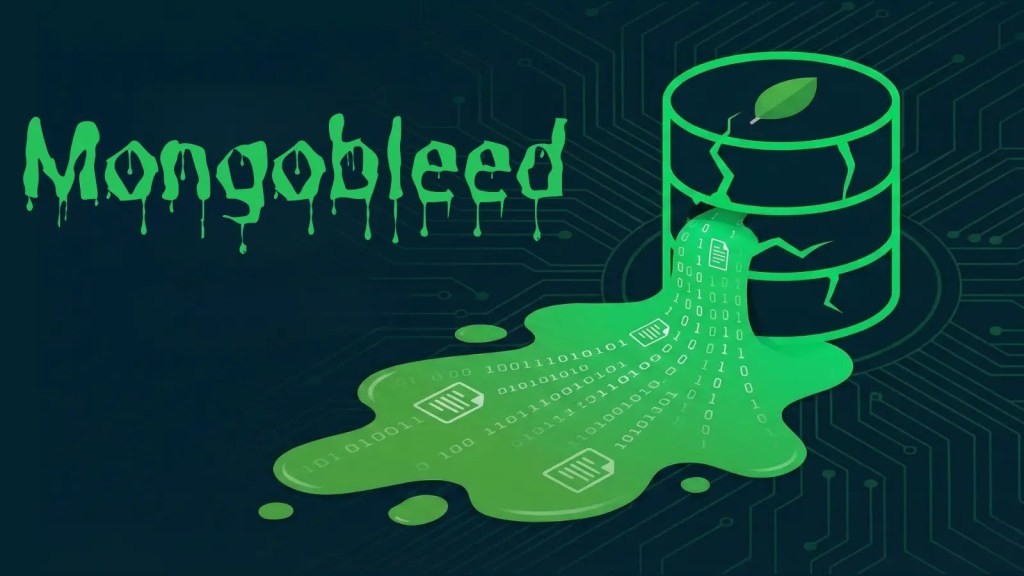
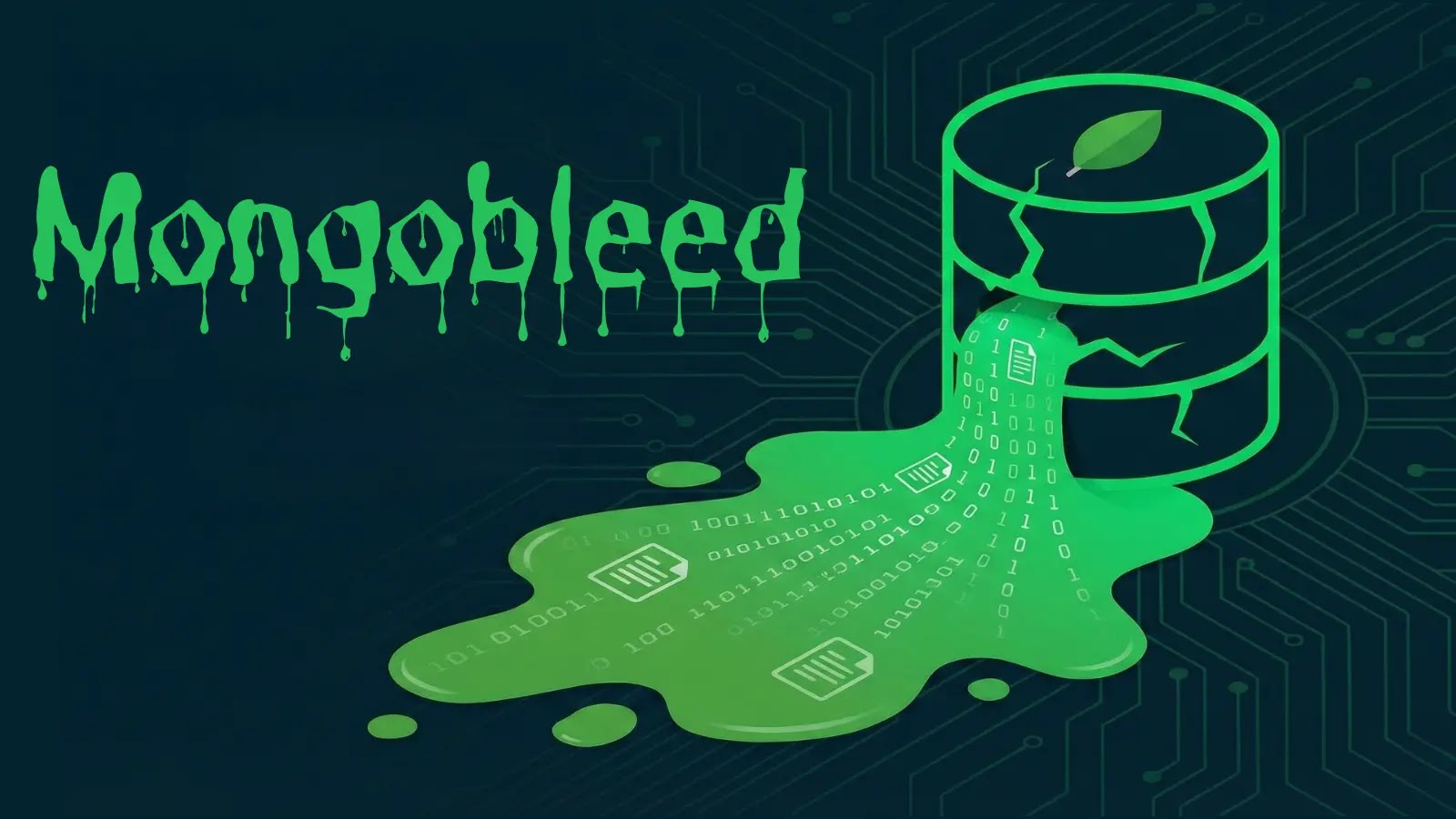
Late December brought a high-risk database vulnerability “Mongobleed” that allows unauthenticated remote attackers to extract fragments of server memory from exposed MongoDB instances. The flaw, “CVE-2025-14847“, carries a high severity rating and has been confirmed as actively exploited in the wild, prompting inclusion on the U.S. CISA Known Exploited Vulnerabilities list with an associated remediation deadline for federal agencies.
Mongobleed originates in the handling of zlib-compressed network messages inside MongoDB Server. When an attacker sends specially crafted compressed packets with inconsistent length fields, the server’s decompression logic can return uninitialized heap memory to the client during the pre-authentication stage. That returned memory can contain sensitive artifacts such as database credentials, API keys, session tokens, and other in-memory secrets. Proof-of-concept exploit code surfaced publicly very shortly after disclosure, contributing to rapid weaponization.
Why pre-authentication memory disclosures are especially dangerous
Pre-authentication vulnerabilities remove a fundamental defensive layer: before any identity or access control is applied, an attacker can trigger behavior that leaks secrets. Unlike post-authentication issues that rely on compromised credentials or privileged accounts, a pre-auth memory disclosure can be exercised by any networked adversary able to reach the service endpoint. The practical impact is that traditional hardening measures—strong passwords, MFA, and role-based access—do not mitigate the core risk posed by this class of flaw. The analogy to earlier memory-disclosure incidents highlights the amplified impact when the target is a data store rather than an application library.
Scope, discovery timeline, and immediate implications
Available analysis shows a substantial global exposure of internet-reachable MongoDB instances with zlib compression enabled, and the window from disclosure to publicly available exploit proof-of-concept was short. That rapid timeline compressed the opportunity to test and stage mitigations before active exploitation. Because the vulnerability leaks uninitialized memory, determining precisely which secrets may have been exposed prior to mitigation is effectively impossible; organizations must therefore assume compromise of any credentials or tokens that may have been resident in memory.
Practical remediation and compensating controls
Patching to a fixed MongoDB Server release is the primary corrective action. For environments where an immediate upgrade is operationally infeasible, disabling zlib compression has been identified as a practical compensating control: it removes the vulnerable code path while allowing alternate compressors (for example, snappy or zstd) if supported and acceptable for performance. In all cases, after applying patches or mitigations, rotating any credentials, API keys, cloud access tokens, and session material that may have been in memory during the vulnerability window is mandatory—patching alone does not eliminate the risk that data was previously disclosed.
Final note
The Mongobleed incident reinforces a simple but consequential point: authentication and encryption are necessary but not sufficient. Protocol and implementation defects that operate before authentication can bypass those controls entirely and expose an organization’s most sensitive assets. Rapid discovery, decisive mitigations (including temporary compensating controls), and aggressive secret rotation combined with improved asset visibility are the pragmatic set of actions that materially reduce exposure when a flaw of this nature appears.
A vulnerability was identified in the Windows Imaging Component (WIC) (CVE-2025-50165), specifically within WindowsCodecs.dll, affecting how certain JPEG images are handled during compression. The issue is tied to an uninitialized function pointer that can be reached when processing non-standard JPEG formats using 12-bit or 16-bit color depth. When triggered, this condition results in a crash, and under constrained circumstances may allow execution of arbitrary code.
The root cause is a dereference of an uninitialized function pointer in the compression routine — not in the decoding/rendering code paths normally used when simply viewing an image. The vulnerable symbols are tied to compress_data_12 and compress_data_16, which remain unset when WIC attempts to re-encode certain higher-precision JPEGs. That behavior creates a crash and, under a complex set of attacker-controlled conditions, may be leveraged beyond denial-of-service.
Why only possible under Complex Attacks Scenarios
Real-world exploitation requires several preconditions. First, the target application must actually invoke the vulnerable compression/re-encoding code path — merely opening or rendering an image in most viewers is insufficient. Typical trigger scenarios include thumbnail generation or explicit re-saving operations that re-encode the image into a 12- or 16-bit JPEG. Second, an attacker needs reliable memory-state information (address leaks) and substantial heap-manipulation capability to convert the crash into controlled code execution. Those prerequisites substantially reduce the practical attack surface compared with a simple “open this JPEG and you’re pwned” scenario.
What was fixed and who should act
Microsoft has released updates that initialize the affected function pointers and add NULL checks prior to dereferencing, mirroring fixes that were already present in libjpeg-turbo 3.1.1 for similar code paths. Systems running vulnerable WindowsCodecs.dll builds in the 10.0.26100.0 through 10.0.26100.4945 range were identified as affected; applying the vendor patch eliminates the specific crash vector described. Organizations that handle untrusted images — particularly services that programmatically re-encode user images or generate thumbnails — should prioritize deploying the update and validating their image handling workflows.
Final note
I assess this vulnerability as notable but contained: the technical root cause is clear and the vendor patch addresses it directly, while exploitation in the wild would be difficult because it depends on re-encoding paths, rarer image formats, and additional memory-corruption primitives. That makes this a high-severity bug to patch rather than a crisis requiring emergency incident response for most organizations — it’s a strong reminder that image processing remains a legitimate attack surface and that defensive controls (patching, input validation, sandboxing) are still the most effective countermeasures.
The Shadowserver Foundation’s internet scans have identified roughly 125,000 IP addresses for WatchGuard Firebox appliances that appear to be unpatched and reachable from the public internet. This exposure coincides with a critical unauthenticated remote code execution vulnerability in the Fireware OS IKEv2 handling, tracked as CVE-2025-14733.
The issue is an out-of-bounds write in the iked process—the component responsible for IKEv2 VPN key exchange in Fireware OS. If exploited, the vulnerability can allow a remote, unauthenticated attacker to execute arbitrary code on an affected appliance. Both mobile user VPNs that use IKEv2 and branch-office VPN configurations using IKEv2 with dynamic gateway peers are implicated. These technical details are reflected in vendor and vulnerability database records.
Severity and consensus on impact
WatchGuard has classified the issue as critical and released fixed Fireware builds. WatchGuard’s advisory attributes a high CVSS severity, and the NVD/CNA entries list the flaw as allowing unauthenticated remote code execution — a near-worst-case outcome for an edge networking product. Federal agencies have also been notified: the vulnerability was added to the U.S. Known Exploited Vulnerabilities catalog, which shortens remediation timelines for affected organizations.
Who’s affected and the recommended upgrades
Multiple Fireware OS branches are affected. Vendor guidance and NVD records list impacted releases within the 2025.x, 12.x, and certain 11.x ranges and map them to the resolved versions WatchGuard has published. Administrators are advised to validate appliance models and installed Fireware builds and to apply the vendor-provided updates immediately where available. For end-of-life branches that will not receive fixes, organizations should plan rapid replacement or network isolation.
Indicators to look for and immediate controls
WatchGuard has published indicators of attack and guidance for detecting suspicious IKE traffic; defenders should search for unusually large IKE_AUTH payloads, certificate chain anomalies, and other IKE negotiation irregularities in firewall logs. Given that active exploitation has been observed, the practical priorities are straightforward: confirm inventory, apply vendor fixes, and monitor for the IoAs WatchGuard provided. If you suspect compromise, treat the appliance as potentially breached: isolate it, preserve logs, rotate locally stored credentials, and follow incident-response procedures.
Final note
This incident is a reminder that gateways remain a prime target: an unauthenticated RCE in a firewall VPN stack is high-impact by design. The combination of a remotely exploitable IKEv2 parsing bug, active scanning results showing many internet-reachable appliances, and confirmed exploitation elevates urgency from advisable to mandatory. Organizations that still expose management or VPN-terminating appliances directly to the internet should treat this as a catalyzing event to accelerate patching, inventory hygiene, and segmentation.






 Mourad Maacha