Category: Cyber News

  • OpenAI Bans ChatGPT Accounts Used by Russian, Chinese & Iranian Hacker Groups

    OpenAI Bans ChatGPT Accounts Used by Russian, Chinese & Iranian Hacker Groups

    OpenAI has taken down a network of ChatGPT accounts tied to state-sponsored threat actors from Russia, China, and Iran. These accounts were reportedly using the AI platform for cyber operations, influence campaigns, malware development, and other malicious activities.

    Main Takeaways

    • OpenAI disabled hundreds of accounts linked to malicious actors in various countries.
    • The accounts were involved in operations such as social engineering, espionage, influence efforts, and scam infrastructure.
    • The action highlights both the misuse of AI tools by adversaries and the role AI providers play in policing abuse.

    Details

    The threat actors used ChatGPT to assist with tasks like writing code (including for malware or infrastructure), automating social media posting, or preparing influence content.
    One operation, dubbed “Operation Sneer Review,” focused on content around Taiwan and included campaigns in English and Chinese.Some accounts also appear tied to North Korean IT worker schemes, where ChatGPT was used to draft resumes, enable fraudulent job applications, or automate parts of operations.

    OpenAI’s investigative teams used their AI capabilities to detect abusive patterns and associations, then acted to disable accounts.The banned operations had targeting beyond a single country, with focus areas including the U.S., Europe, and regions of geopolitical interest.

    Risks

    • AI tools like ChatGPT are increasingly used by threat actors as force multipliers — improving speed, scale, and sophistication of attacks.
    • Because these actors use legitimate infrastructure and plausible tasks (coding, translation, social media), detection is challenging.
    • The bans show that AI platform providers have to be vigilant about misuse and increasingly act as gatekeepers.
    • There’s ongoing risk of such actors finding new accounts, shifting tactics, or exploring other AI models.

    Mitigation

    • Monitor AI usage logs — track unusual or high-volume queries, especially those involving code, translation, or political content.
    • Apply identity vetting & risk scoring — more stringent checks on accounts or usage patterns that match threat actor profiles.
    • Share threat intelligence — collaborate across AI providers and cybersecurity communities to flag abusive actors.
    • Limit privileged use cases — confine usage of critical features (e.g. code generation, system advisories) to vetted users.
    • Audit content & output — analyze AI-generated outputs for patterns, reused prompts, or batch behaviors that suggest automation.
    • Respond quickly to abuse — have processes to disable accounts, revoke API keys, and investigate suspicious activity.
  • Deepfake Attacks: What’s Growing & How to Fight Back

    Deepfake Attacks: What’s Growing & How to Fight Back

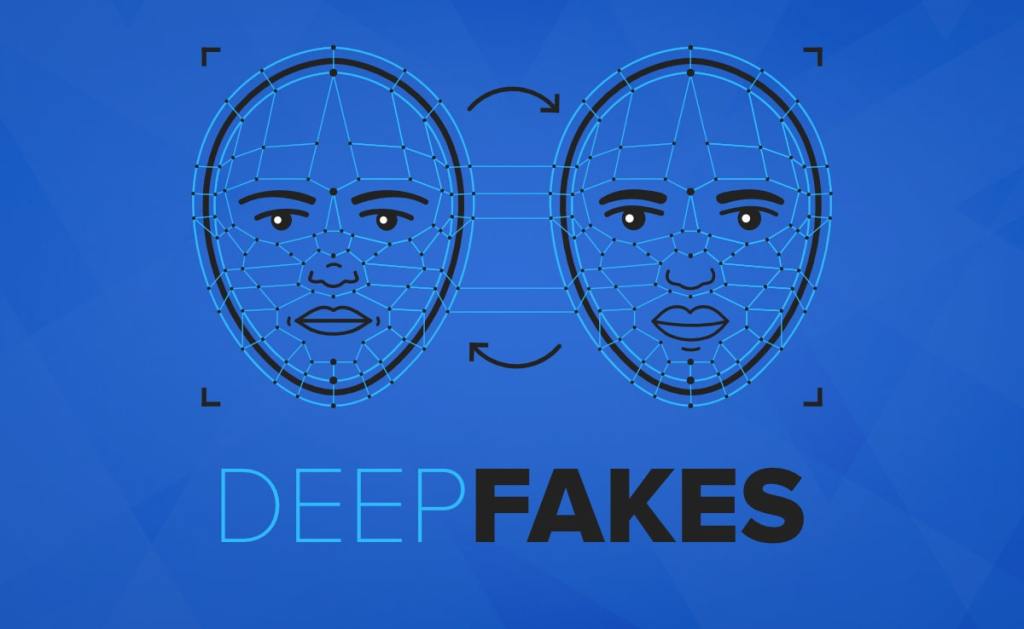
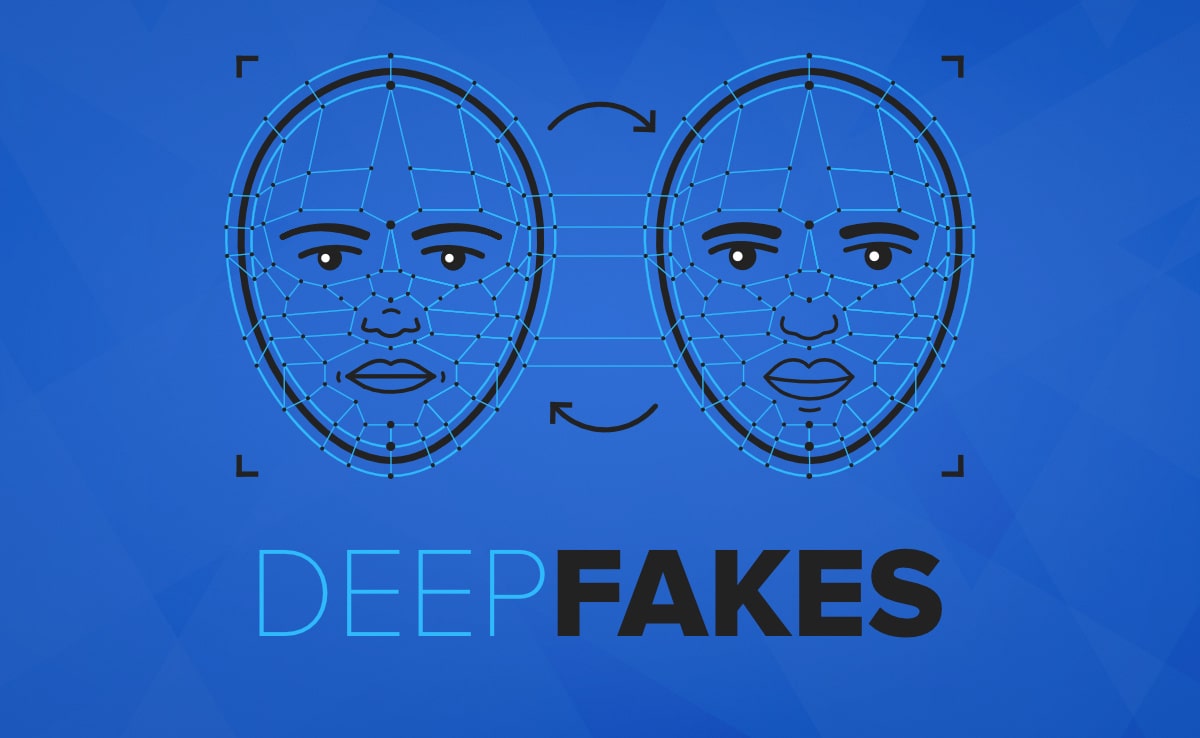
    Deepfake attacks—AI-driven fake audio, video, images, and documents—have surged dramatically. What used to be rare fraud attempts are now a regular danger. This article lays out what’s changing, what detection tools are being developed, and what individuals and organizations should do to protect themselves.

    Takeaways

    • Deepfake fraud has exploded: increasing from a negligible share of fraud attempts to now making up over 6% of cases.
    • Losses in early 2025 alone topped $200 million; everyone is a potential target—not just high-profile figures.
    • To defend yourself, use strong identity checks, invest in detection tech (multimodal, physiological signals, etc.), limit what you share publicly, and train people to spot deepfake tricks.

    What’s Changing

    • Fraud caused by deepfakes rose by over 2,000% in just a few years.
    • The frequency is alarming: in 2024, deepfake attacks were happening every ~five minutes.
    • More than financial loss are the consequences: reputation damage, extortion, even emotional or social harm—especially among women, children, and institutions like schools.
    • Many incidents cross borders, making law enforcement and legal recourse more complex.

    Attack Types & Methods

    • Presentation attacks, e.g., someone using a deepfake live video (during a video call) to impersonate another for scams or identity theft.
    • Injection attacks, meaning prerecorded or edited deepfake content used later—for example during identity verification, onboarding, or document checks.
    • Formats used vary: video is almost half of all deepfake incidents; images and audio make up the rest. Also, document forgeries are spiking: fake IDs and falsified official documents are now more common than old-style paper counterfeits.

    Detection Tools & Techniques

    • Machine learning trained on large datasets is identifying subtle signs: odd blinking, strange face or expression dynamics, unnatural light or shadow behavior, mismatched audio & lips, etc.
    • Other methods: analyzing physiological cues (heartbeats, micro-movements) that current deepfake tools have trouble mimicking convincingly.
    • Multi-modal detection (comparing audio + image + behavior) is emerging as the strongest approach; in labs these methods are already achieving over ~90% accuracy in controlled tests.

    Prevention

    For organizations & individuals:

    • Use identity verification processes that force “live presence”—don’t just accept uploaded photos; ask for actions in real time.
    • Use biometric systems that check for signs of life (e.g., gestures, voice) to make sure the person is real.
    • Be careful about how much and what kind of content you share online: high-quality photos/videos in public can become raw material for deepfake creation.
    • Use multi-step verification for sensitive operations—things like financial transfers, identity checks, or onboarding should have confirmations, maybe even verbal or internal checks.
    • Educate staff, especially executives, to recognize deepfake risks: unusual requests, unethical/urgent pressure, unsolicited video calls, etc.

    What to Expect Going Forward

    • Deepfake tools are getting cheaper, more powerful, and more broadly available—even to less technical actors.
    • Regions with rapid digital adoption, like Asia-Pacific, are expected to see especially large growth in both generation and exploitation of deepfakes.
    • The “deepfake economy” (tech, tools, services) is projected to grow rapidly in value over the next few years.
    • To stay ahead, security strategies need to be both technical (detection, verification) and human (awareness, policy, training).
  • Tenable Network Monitor Flaws Could Let Attackers Manipulate Alerts, Execute Code

    Tenable Network Monitor Flaws Could Let Attackers Manipulate Alerts, Execute Code

    A trio of security vulnerabilities has been disclosed in Tenable Network Monitor (TNM), including one remote code execution flaw and two other high-severity bugs. These issues allow attackers to tamper with alerts, execute arbitrary code, or abuse misconfigurations.

    Key Takeaways

    • Three flaws affect Tenable Network Monitor: CVE-2025-4647, CVE-2025-4648, and CVE-2025-4649.
    • The most serious is an RCE in the alerting mechanism, letting attackers run code remotely.
    • Patches are available; administrators should upgrade and validate integrity of rule sets and permissions.

    Vulnerabilities Overview

    • CVE-2025-4647 (Remote Code Execution in Email Alerting)
      A specially crafted email can trigger code execution in the TNM alerting subsystem. If attackers can send emails that the system processes, they may execute commands under the context of the monitoring application.
    • CVE-2025-4648 (Alert Rule Manipulation)
      This flaw permits local authenticated users to manipulate alert rules—adding, deleting, or modifying rules to hide malicious activity or suppress detection.
    • CVE-2025-4649 (Data Leakage / Unauthorized Access)
      In certain scenarios, attackers may gain access to sensitive internal data due to mispermission handling across modules, causing unauthorized disclosure.

    Impact

    • Attack scope: The RCE via email alerts presents the most direct external risk, especially in environments where TNM is exposed to mail or untrusted sources.
    • Insider threat risks: Manipulating alert rules or suppressing detection gives malicious insiders or compromised accounts an opportunity to hide malicious actions.
    • Operational risk: Tampering with the monitoring system undermines trust in alerts, potentially causing teams to miss real incidents.
    • Prerequisites: Some vulnerabilities require local or authenticated access; others hinge on email channels being improperly protected.

    Recommended Actions

    • Apply patches/updates immediately: Upgrade to the fixed versions provided by Tenable.
    • Harden mail ingestion paths: Restrict which email addresses or domains TNM will process alerts from, ideally using allowlists and authentication.
    • Restrict TNM config permissions: Limit which users/processes can modify alert rules and rule sets.
    • Validate rule integrity: Periodically compare active alert rules against baselines or approved templates.
    • Monitor for unauthorized changes: Use file integrity monitoring or change detection on config directories and rule files.
    • Isolate the monitoring system: Ensure network segmentation so that TNM isn’t exposed to untrusted networks or email paths.
  • BreachForums Admin to Pay $700,000 in Health Care Data Breach

    BreachForums Admin to Pay $700,000 in Health Care Data Breach

    About the book

    A U.S. court has ordered Conor Brian Fitzpatrick, the former administrator of the cybercrime site BreachForums, to forfeit roughly $700,000 as part of a legal settlement tied to a healthcare data breach.

    Key Takeaways

    • Fitzpatrick, also known by his alias “Pompompurin,” is being held financially accountable in civil court for his role in facilitating the sale of stolen patient data.
    • This is one of the few cases where a dark-web forum operator is being named in a civil lawsuit alongside a breach victim.
    • The forfeited money links to a broader class action settlement aimed at compensating victims of a medical insurer’s leak.

    Key Facts

    • BreachForums grew out of the closure of RaidForums and became a major online marketplace for stolen data.
    • As administrator, Fitzpatrick vetted databases for sale, operated escrow services, and oversaw forum operations with more than 300,000 users and over 14 billion records of leaked data.
    • The specific breach involved Nonstop Health, a California insurer. In 2023, their data (SSNs, birthdates, addresses, phone numbers) was posted for sale on BreachForums.
    • In 2023, Nonstop Health added Fitzpatrick as a defendant in their class complaint, making him directly financially liable for data breach damages.
    • Fitzpatrick had already faced criminal charges—pleading guilty to access device fraud and possession of child sexual abuse material—and previously received a light sentence. He also committed violations post-release (e.g. accessing restricted systems), which led an appeals court to vacate the initial sentence.

    Implications

    • The case sets precedent: cybercrime actors may not be beyond civil liability even if law enforcement steps are pursued separately.
    • This move bridges civil and criminal accountability, making operators of illicit forums more exposed in multiple legal arenas.
    • For breach victims, it offers a pathway to recovery by targeting financial gains of intermediaries, not just attackers.
    • The forum ecosystem may shift risk models—future operators may face scrutiny from victims’ lawyers even beyond law enforcement.
  • VMware Tools Vulnerability Lets Attackers Manipulate Guest File Operations

    VMware Tools Vulnerability Lets Attackers Manipulate Guest File Operations

    A moderate-severity weakness in VMware Tools (for Windows and Linux) has been found that allows users with non-administrator access inside a guest VM to alter certain files and induce insecure operations, potentially breaking the virtual machine’s integrity.

    Key Takeaways

    • The flaw (CVE-2025-22247) affects VMware Tools versions 11.x and 12.x on Windows and Linux (macOS unaffected).
    • An attacker with limited permissions in a guest VM can tamper local files and trigger unsafe behavior within that VM.
    • VMware has released patched versions to fix this. No mitigations or workarounds currently exist — updating is the only effective fix.

    The Vulnerability Explained

    • The vulnerability deals with insecure file handling inside VMware Tools: a malicious actor inside the guest OS (with non-admin privileges) can manipulate files so that VMware Tools performs unsafe operations.
    • Because VMware Tools runs with elevated privileges in the guest to carry out tasks (driver functions, guest-host operations), abusing this file handling can let the attacker escalate or compromise guest operations.
    • The issue has been assigned a CVSS v3 score of 6.1 (moderate severity).
    • The flaw was discovered and reported by security researcher Sergey Bliznyuk.
    • Though the attack is limited to within the guest VM, in multi-tenant or cloud environments, this could be chained into broader compromise or lateral movement.

    Affected Systems & Risk

    • Affected versions: VMware Tools 11.x and 12.x, on Windows and Linux. (macOS versions are not affected.)
    • Attack prerequisites: The attacker must already have a non-administrative user account inside the guest VM.
    • Impact: File tampering can lead to changed configurations, elevated privileges, or misuse of operations within the guest.
    • Why this matters: In environments where many virtual machines share infrastructure, guest compromise could be used to escalate or spread attacks.

    Remediation & Best Practices

    • VMware has released VMware Tools version 12.5.2 as the patched release for both Windows and Linux.
    • For 32-bit Windows systems, the fix is in VMware Tools 12.4.7 (included in the 12.5.2 bundle).
    • Linux distributions will adopt fixes via their respective open-vm-tools packages (version names may vary by distro/vendor).
    • No workaround available: patching is the only recommended mitigation.
    • Administrators in virtualized or cloud environments should, as soon as possible, deploy the updates across all affected VMs.
    • Monitor for unauthorized file changes inside guest VMs.
    • Apply principle of least privilege to VM users to limit damage if file tampering is possible.
  • Microsoft Retires Skype After 23 Years, Encourages Switch to Teams

    Microsoft Retires Skype After 23 Years, Encourages Switch to Teams

    Microsoft officially shut down Skype on May 5, 2025, ending over two decades of service in favor of consolidating communications on Microsoft Teams.

    Main Takeaways

    • Skype is now retired; users are being migrated to Teams.
    • All chat histories, contacts, and call logs can be transferred automatically.
    • Skype’s paid services are discontinued (though existing subscriptions remain valid until expiry), and data export options are available for those who do not wish to move to Teams.

    Microsoft is phasing out Skype, pushing users toward its newer, more integrated collaboration platform, Teams. The change is part of a broader strategy to unify communication tools under a single offering rather than maintaining multiple overlapping products.

    During the transition period (February → May 2025), users received prompts and support for migrating their contacts, message history, and settings to Teams. Microsoft has made it so that existing Skype credentials can be used to sign into Teams, simplifying the migration process.

    What This Means for Users

    • Chats & Contacts: All your previous conversations and contact lists will carry over into Teams.
    • Paid / Subscription Services: New purchases of Skype Credit or subscriptions are discontinued. Users with active plans can continue using them until their current billing period ends.
    • Data Export: For those who don’t want to join Teams, Microsoft offers tools to export Skype data (messages, contacts, etc.).
    • Legacy Use: Skype’s relevance and user base have declined over time; this move reflects Microsoft’s decision to streamline and invest in its modern unified communications platform.
  • FastCGI Integer Overflow Flaw Lets Attackers Execute Code on Embedded Devices

    FastCGI Integer Overflow Flaw Lets Attackers Execute Code on Embedded Devices

    A critical vulnerability in the FastCGI library (fcgi2 / fcgi) has been disclosed that enables remote code execution on embedded devices by triggering a heap-based buffer overflow via an integer overflow in parameter handling.

    Main Takeaways

    • Vulnerability CVE-2025-23016 affects FastCGI versions 2.x through 2.4.4.
    • The flaw is in the ReadParams function: crafted nameLen and valueLen values overflow integer arithmetic on 32-bit systems, causing undersized memory allocations and buffer overflow.
    • Exploits allow overwriting function pointers in FastCGI’s internal structures (e.g. fillBuffProc), enabling attackers to hijack execution flow.
    • Patches (FastCGI 2.4.5 and later) are available; devices using TCP sockets for FastCGI or exposed IPC endpoints are especially at risk.

    Details of the Vulnerability

    • The flaw hinges on the way the FastCGI library reads and computes memory allocation sizes for HTTP parameters in ReadParams. When both nameLen and valueLen are set to maximum 32-bit values (e.g. 0x7FFFFFFF), adding them (plus a small constant) causes an integer wraparound on 32-bit platforms.
    • This results in allocating a buffer much smaller than required, then writing the actual parameter data into it, which overflows into adjacent heap memory.
    • Attackers can manipulate FastCGI’s FCGX_Stream structure in memory, replacing the fillBuffProc function pointer with a command execution function (like system) and planting a shell command in the input stream. Later, when fillBuffProc is called, the injected code is executed.
    • Because many embedded devices (cameras, IoT appliances) use 32-bit systems and minimal exploit defenses (no ASLR, weak memory protections), they are especially vulnerable.
    • Note: This vulnerability does not affect PHP-FPM, which uses its own FastCGI protocol implementation.

    Impact

    • Affected versions: FastCGI (fcgi2) up to 2.4.4
    • High-risk targets: Embedded devices (IoT, smart cameras, appliances) using 32-bit architecture
    • Attack vector: Access to the FastCGI IPC socket (locally or via network, e.g. via SSRF or web server misconfiguration)
    • Exploit conditions: Ability to send crafted parameter data, 32-bit environment, exposed FastCGI endpoint
    • Result: Arbitrary code execution, takeover of the device

    Mitigation & Recommended Actions

    • Upgrade: Move to FastCGI version 2.4.5 or later, which includes bounds checking to prevent integer overflow.
    • Socket configuration: Use UNIX domain sockets rather than TCP sockets for FastCGI communication, reducing exposure.
    • Access restriction: Ensure the FastCGI socket is not exposed to untrusted networks or remote access.
    • Network segmentation: Place vulnerable embedded devices behind firewalls or segmentation so attackers cannot reach their FastCGI interfaces.
    • Patch deployment: Prioritize patching embedded systems, especially in environments where they cannot be replaced frequently.
    • Monitor & audit: Look for anomalous FastCGI traffic or suspicious parameter sizes; track unexpected process behavior on embedded nodes.
  • Hackers Weaponizing Certificates & Stolen Private Keys to Infiltrate Organizations

    Hackers Weaponizing Certificates & Stolen Private Keys to Infiltrate Organizations

    Threat actors are increasingly stealing or abusing digital certificates and private keys to sign malware and masquerade as trusted software — a tactic that lets malicious code bypass many traditional security controls and impersonate legitimate vendors.

    Main Takeaways

    • Attackers are harvesting code-signing certificates and private keys from compromised development or CA environments and using them to sign malware that looks legitimate.
    • These signed payloads can evade application whitelisting, reputation checks, and many endpoint defenses.
    • Defenders should treat signed binaries as potentially hostile, improve certificate lifecycle controls, and monitor for unusual signing activity.

    Adversaries begin with targeted access (often spear-phishing) against development teams or certificate management personnel, move laterally to locate signing keys or CA infrastructure, then extract private keys or PFX files. With those artifacts, attackers can sign malware using standard tools (for example, SignTool), making the malware appear to come from a trusted vendor. This technique has been linked to multiple recent compromises and is growing in prevalence.

    Digital certificates and code signatures are foundational to trust models used by operating systems, update systems, and enterprise allowlists. When an attacker uses a legitimately signed binary, it can bypass:

    • Application whitelisting and execution policies
    • Basic reputation-based filtering
    • Some runtime protections that rely on origin or publisher checks

    That means signed malware can run with fewer obstacles and remain undetected longer, increasing dwell time and impact.

    Typical attack chain (high level)

    1. Initial access — spear-phishing or compromise of a developer/ops workstation
    2. Lateral movement — escalate privileges and search for signing toolchains, certificate stores, or CA infrastructure
    3. Key harvesting — extract private keys or exported .pfx files and any passphrases
    4. Weaponization — sign malicious payloads with the harvested certificate
    5. Distribution & execution — deploy the signed malware via email, supply-chain updates, or internal tools to maximize trust and reach

    Organizations compromised via certificate abuse face severe consequences: high-value data exfiltration, reputational harm, and costly remediation (enterprise remediation costs often exceed millions). A substantial portion of recent compromises involves some form of certificate or key abuse.

    Practical defenses

    • Treat signed binaries with skepticism. Don’t automatically trust every signed executable — add behavioral checks and file-integrity verification
    • Harden certificate lifecycles. Enforce strict access controls to private keys, use hardware security modules (HSMs) for key storage, require multi-party approval for exports, and rotate keys regularly
    • Monitor signing activity. Alert on new or unexpected signing events, large numbers of signatures, or signatures from unknown environments. Correlate signing events with asset inventory and CI/CD activity
    • Protect build and CI/CD systems. Segment and harden developer workstations and build servers; require MFA, least privilege, and continuous logging for those systems
    • Enforce runtime controls. Combine allowlists with reputation, telemetry, and behavioral detections so that signed-but-malicious binaries can still be flagged
    • Prepare rapid revocation. Have procedures to revoke and replace compromised certificates quickly and to publish CRL/OCSP changes to prevent further trust exploitation
  • Does AI-Powered Phishing Detection Actually Work?

    Does AI-Powered Phishing Detection Actually Work?

    Phishing attacks keep getting more sophisticated, and AI-driven detection tools are being pitched as a way to stay ahead. This article examines how well those tools are living up to the hype, what strengths they bring, and what pitfalls organizations should watch out for.

    Main Takeaways

    • AI systems (machine learning, NLP, behavioral analysis) can detect phishing variants that static, signature-based tools often miss.
    • But they’re not perfect — false positives, model drift, and adversarial evasion are real risks.
    • To succeed, organizations need to pair AI tools with user training, continual tuning, and strong metrics and monitoring.

    Phishing & AI: What’s Changed

    • Phishing isn’t just mass emails with glaring typos anymore. Attackers now use personalized social engineering, target individuals or organizations (spear-phishing), and sometimes work with generative AI, making messages look polished and believable.
    • Because blacklists and signature detection fall short when attackers constantly change tactics, AI-enabled systems try to catch the underlying behavior or subtle clues — linguistic style, urgency cues, sender behavior, design signals, etc.

    AI-powered phishing detection systems usually combine several techniques. They use machine learning models trained on large and diverse datasets to identify patterns that look unusual compared to normal communication. Natural Language Processing (NLP) analyzes the wording, tone, and urgency of messages to spot linguistic markers that suggest a phishing attempt. Behavioral analysis monitors user and host activity, flagging deviations such as sudden spikes in clicking suspicious links or unusual login activity. Some tools also employ computer vision to inspect the design and layout of emails or web pages, checking for logos, images, or other elements that mimic trusted brands. Finally, these systems integrate threat intelligence feeds so their models stay current as attackers develop new phishing methods and lures.

    For AI anti-phishing tools to actually deliver value, organizations should:

    1. Have a comprehensive strategy. Use layered defense: technology + user awareness + response plans.
    2. Choose tools that match risk profile. Different industries / threat models demand different capabilities (e.g. finance vs. education vs. healthcare).
    3. Integrate with existing systems. Ensure the new AI tools work with current email systems, SIEMs, endpoint tools, policies.
    4. Track meaningful metrics. Success isn’t just “how many phishing emails caught” but also how quickly, how many false alarms, how many user reports, etc.
    5. Continuously update & tune models. Threats evolve; attackers test defenses. The AI needs ongoing training, feedback loops, threat intel, model validation to avoid drift.
    6. Plan for possible issues. False positives, over-blocking, evasion by attackers manipulating inputs, privacy concerns, and transparency of decisions (why an email was flagged).

    Limitations & Risks

    • High false positive rates can frustrate users and reduce trust in the tool.
    • Attackers are also adapting: using adversarial techniques to evade ML/NLP detectors.
    • Data bias or lack of relevant training data (e.g. specific lures used in your industry) can reduce effectiveness.
    • Operational overhead: tuning, monitoring, integrating alerts, handling escalations.
    • Privacy, legal, and ethical concerns around analyzing user behavior / content.

    Bottom Line

    AI-powered phishing detection isn’t a silver bullet, but it’s a powerful component in modern cybersecurity. When implemented carefully—with good metrics, human oversight, and ongoing tuning—it can significantly improve detection of smarter phishing attacks. But organizations need to be realistic: AI helps reduce risk, not eliminate it.

  • Threat Actors Leverage Windows Screensaver Files to Deliver Malware

    Threat Actors Leverage Windows Screensaver Files to Deliver Malware

    Security researchers have uncovered a malicious campaign in which threat groups are using Windows screensaver files (.scr) as a seemingly innocuous vehicle to drop malware. Because screensavers are executable by nature, attackers exploit them to run malicious payloads under the radar of many security defenses.

    Main Takeaways

    The campaign abuses the fact that Windows treats .scr files as executables. Attackers are embedding malicious code inside screensavers and distributing them via phishing or trusted channels. When a victim launches or allows the screensaver to run, the malware drops and executes, often delivering backdoors, ransomware, or credential stealers.

    Windows screensaver files have the .scr extension but are treated as standard executables by the OS. That means that if .scr files are launched, they behave like .exe files. In this attack campaign, adversaries are packaging malicious payloads inside .scr files, sometimes disguising them as harmless visual novelty items or tools. Victims are tricked into running these screensavers via phishing lures, cracked software downloads, or via social engineering tactics (e.g. “cool screensaver pack!”). Once executed, the .scr file can drop additional malware components, establish persistence, steal credentials, or act as a staging point for further compromise.

    Why This Works & What Makes It Dangerous

    Because .scr files are inherently executable, many security tools treat them like any ordinary program—so they can evade some file-type restrictions or heuristics. Further complicating detection, attackers may obfuscate payloads, use packing, or hide malicious behavior until runtime. Since screensavers are often considered benign by users and defenders alike, they make good “Trojan horses” for malware. Once inside, the malware can abuse the usual post-exploitation techniques: privilege escalation, lateral movement, credential theft, or data exfiltration.

    Mitigation

    To defend against this tactic, organizations should adopt a few key practices. First, block or restrict execution of .scr files in policy or via application control—especially in user directories or systems where screensavers are unlikely. Educate users that screensaver files can be malicious, and discourage downloading or executing .scr files from untrusted sources. Use behavioral or runtime analysis tools that look beyond file types to observe suspicious activity such as process spawning, persistence attempts, or network connections from unexpected binaries. Perform file integrity, whitelist/blacklist enforcement, and monitor for abnormal file rename or execution behavior. Finally, regular threat hunting and endpoint telemetry reviews should include checks for screensaver-type executables in suspicious contexts.